F1 In School
Creating a miniature F1 car propulsed by gas
CAD
CFD
CNC
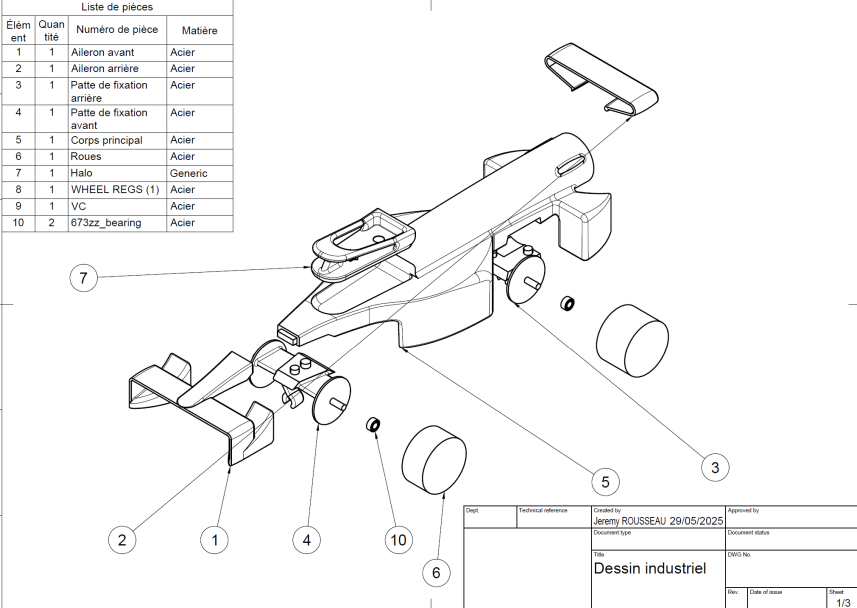
Creating a miniature F1 car propulsed by gas
Engineering project conducted at Arts et Métiers (ENSAM) in 2025 as part of a first-year design studio. The objective was to design a high-performance miniature Formula 1 car, propelled by a CO₂ cartridge, for a 20-meter track while respecting the strict F1 in Schools regulations. The challenge was to minimize aerodynamic drag, reduce frictional losses, and achieve the lowest possible mass.
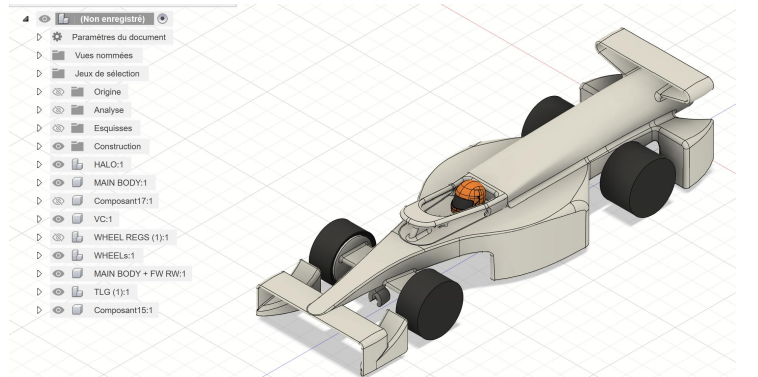
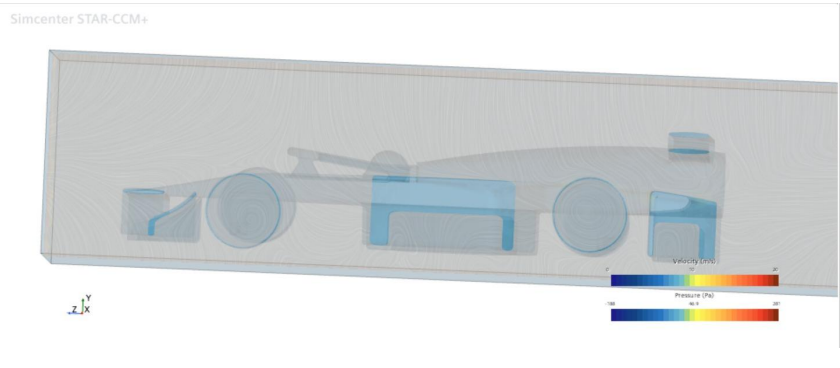
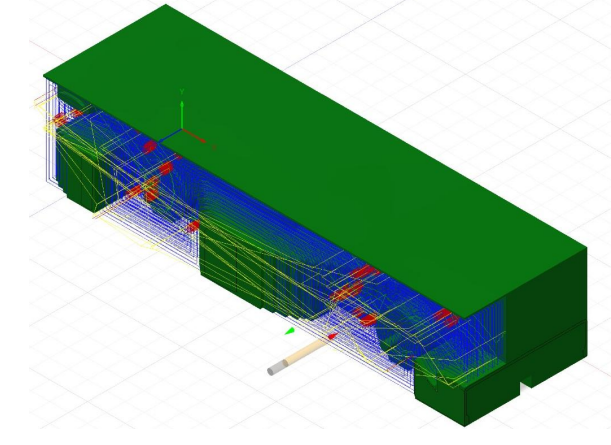
The development cycle followed a rigorous engineering methodology, from functional specifications to design, simulation, manufacturing, and testing. CAD work was carried out in Fusion 360, simulations in STAR-CCM+, and the final prototype was CNC-machined from official F1 blocks.
Aerodynamic analysis revealed rear lift caused by the thrust line, which required adjustments to wheel positioning and center of mass. Precision in 3D printing and machining strongly influenced regulatory compliance, often requiring manual corrections.
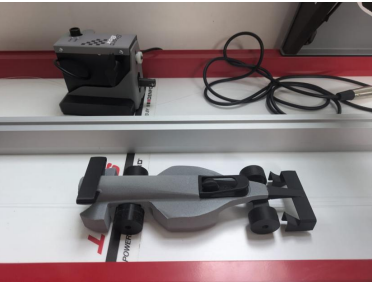
Track testing showed the importance of wire guidance stability, as excessive oscillations could reduce performance. The analysis also highlighted differences between the acceleration phase (first 10 m, dominated by propulsion) and the aerodynamic phase (last 10 m, dominated by drag effects).
This project provided hands-on experience across the entire engineering process, from CAD/CAM design to simulation, prototyping, and experimental testing. It underlined the importance of multidisciplinary teamwork, iterative design improvements, and strict compliance with regulations. Despite limited resources, the team achieved a functional and competitive prototype, while identifying clear areas for future optimization.
View Report PDF